
New icons for Server and Client

Creating beautiful assets is always a challenge. I recently needed a set of icons for our installer, and I decided to tackle it myself. Unfortunately, my initial attempts were… not great. Everything looked flat and uninspired. Then, a…
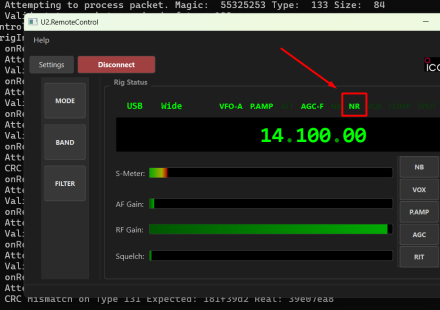
That Noise Reduction…
Yesterday, while working on U2.Suite, I met an interesting “bug”. After some changes, the audio stopped playing. I wrote additional tests for TcpClient and TcpServer, verified the network connections, and confirmed the audio buffers were…
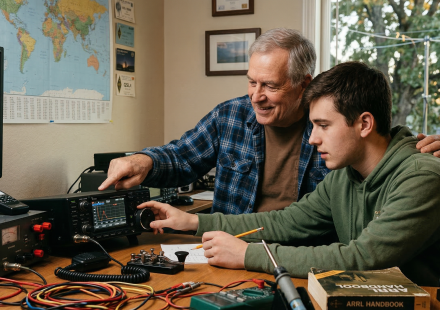
The “Elmer” Shortage: Why Mentoring is the Most Important Thing You Can Do This Year
As we look at the amateur radio landscape in 2026, the numbers tell an interesting story. Licensing is actually on the rise, driven by an interest in emergency preparedness and the accessibility of digital modes. However, there is a quiet crisis…
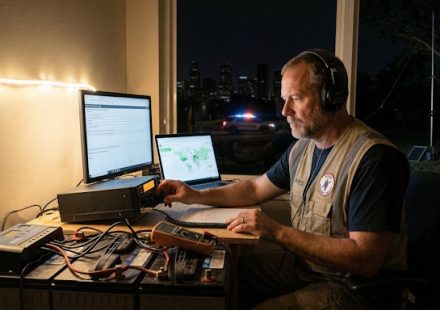
Emergency Comms 101: Why Amateur Radio is the Most Professional Backup During a Grid Failure
When the power grid collapses and the cellular network is overwhelmed by “all circuits busy” messages, the primary infrastructure we rely on for modern life becomes a series of silent towers and dark screens. It is during these critical…
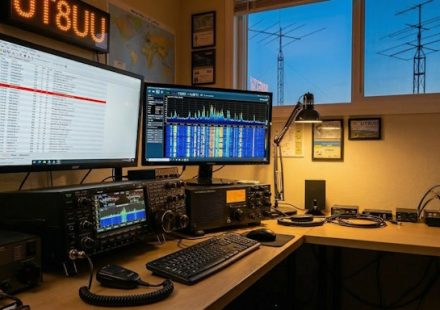
The Art of the Pile-up: Getting Heard in the 1,000-Station “Swarm”
We’ve all been there. A rare DXpedition pops up on the cluster, you tune to the frequency, and all you hear is a wall of sound—a “swarm of bees” so thick it feels impossible to penetrate. In a massive pile-up, raw power helps, but strategy is…
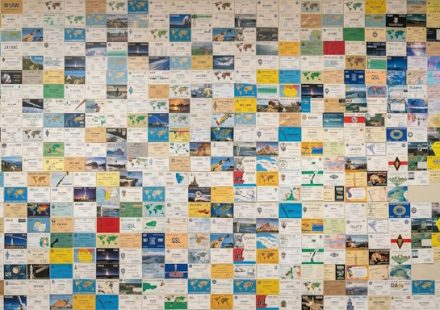
QSL Etiquette in a Digital World: Is the Paper Card Dead or Just “Vintage”?
As we move through 2026, the hobby has never been more digitized. With FT8 dominating the bands and logs uploading to the cloud in milliseconds, some hams wonder if the traditional paper QSL card is a relic of a bygone era—the “rotary phone”…
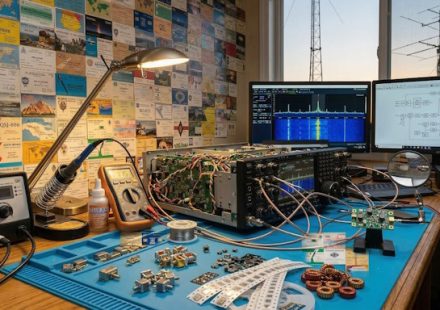
SDR Transceivers: Is the Traditional “Superhet” Finally Obsolete?
If you were to open the hood of a high-end ham radio from the 1990s, you’d find a complex maze of crystal filters, mixers, and intermediate frequency (IF) amplifiers. This is the Superheterodyne (Superhet) architecture—a design that has reigned supreme…
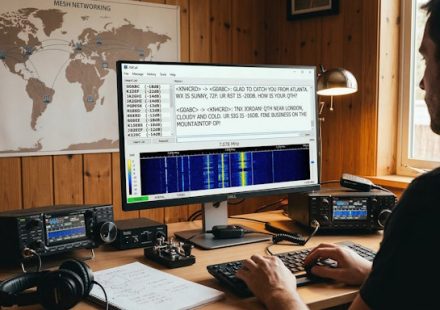
Beyond FT8: Exploring JS8Call for Keyboard-to-Keyboard Messaging
If you love the weak-signal performance of FT8 but hate that you can’t actually talk to anyone, you aren’t alone. While FT8 has revolutionized HF by allowing us to make contacts through the noise, it is strictly limited to structured exchanges: callsign,…
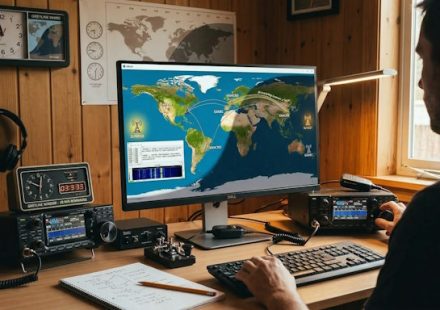
Greyline DXing: Why the “Golden Hour” is Your Secret Weapon for DX
In the world of amateur radio, timing isn’t just everything—it’s the only thing. If you’ve ever sat in your shack at dawn or dusk and watched the bands suddenly “explode” with signals from halfway across the planet, you’ve witnessed the…
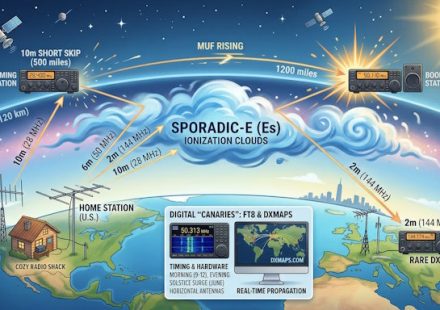
Sporadic-E Season: Tips for Catching Those “Impossible” VHF Openings
If you’ve ever been scanning the 6-meter or 2-meter bands during a quiet summer afternoon only to have your speakers suddenly explode with a station from 1,200 miles away, you’ve experienced Sporadic-E (Es). Unlike regular propagation, which follows the…